Showing posts with label Guest Posts. Show all posts

10.11.12

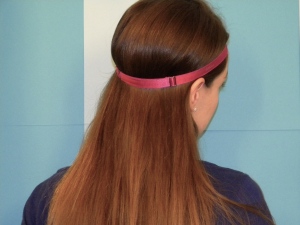
Headband Curls Via Creating Laura


Click on this link to see how to use a headband


To curl your hair!


Genius!

A great idea that can be used on natural hair also. I would do this on two strand twists, a loose hair texture, pressed hair, and braids. Your creativity it the limit.

CreatingLaura.com is full of great craft projects. Check it out!


16.7.12

Video of the Day: Taren916 Addresses the Balance Between Vlogging/Blogging & Bussiness


Many implications...

There are faults on both sides.  By sides I mean the company side and the vlogger side.

I am this close to making a video about it.

hm....

15.7.12

moveSlightly! Creative (and elegant!) Manicure Inspiration


you don't know how hard it was for me to post only threE pictures
 Elizabeth Monson at moveSlightly.com has an approach to nail art that does't involve usually involve neon. This is refreshing because many manicure tutorials are closer to gaudy than I like to be.... Anyway, before I start writing about my personal style, go check out her blog!

8.1.12

Wonderful Articles: Do Black Women’s Features Look Better On White Women?


An AMAZING article from nachalooman.wordpress.com that I HAD share. So true!


I remember back in the 1970s when the movie “10″ with Bo Derek first came out. She had her hair braided in cornrows which was the first time I had seen the style on a white women. I didn’t actually see the film, but saw the ads and Bo’s pictures everywhere. I remember that she was celebrated for being a beautiful woman, but when she came out with her black girl cornrows and beads, she became a goddess to untold millions of white men. Back in those days, posters were all the rage, and women like Bo Derek became millionaires just by having creative control over the posters that they did. Bo Derek had that exotic thing going on with her braids and no doubt sold millions of her posters. BTW, it was her husband who encouraged her to get the style he saw on the sisters in LA.
Ironically, during that same time period, I also remember reading in Essence Magazine I think, about black women who started showing up at work in the beautiful cornrow styles. Not surprisingly, the same style that was so beautiful and exotic on Bo Derek, was considered unkempt and unprofessional on black women in corporate America, no matter how conservatively the braids were done. Sisters who were stewardesses, or who had broken in to corporate America were now being harassed or even being fired for daring to show up at work wearing the cornrow hairstyle.
The more things change, the more they stay the same. These days, we see a change in things only in that white women are more aggressive in going for what they desire. 

30.6.11

What’s This Whole “Natural Hair Thing” about anyway? By Belinda Bullard


If we are honest, rocking our natural hair is not exactly new.  In my lifetime, I can remember 70’s images of Pam Grier as Cleopatra Jones and Teresa Graves of “Get Christy Love” fame.   I can also recall Cicily Tyson’s gorgeous cornrows, which are about as much the “Bo Derek” look as big bottoms can be attributed to J-Lo.    So, why the focus on natural hair?   I will share my own perspective, and some of the reasons that I embarked upon this journey, and perhaps in doing so I will touch upon something that resonates with you.

Health.  Rarely have I seen a more graphic image of the damage that sodium hydroxide, the primary component in chemical perms, can do than in the movie “Good Hair.”   Producer/ narrator Chris Rock engages in light dialogue with a scientist, who simultaneously conducts an experiment of soaking a soda can in sodium hydroxide.    Within minutes the soda is irreparably damaged; in hours there is no can.    Of course, hopefully none of us allow chemicals to remain on our heads for that long—few of us could stand it!   Yet, the image, and the images of scalp burns following this experiment are all too real for me.   I can remember my first experiment with a “bad” perm in middle school, and how I felt and looked as multiple burns began to leak pus, gluing my hair together over the next couple of days.   My mother was not one to allow to us to miss school for any reason, so I had to face my classmates on what redefined for me the meaning of a ‘bad hair day.’   It might be a function of age, but burns, especially around my scalp line, were becoming more and more of a regular occurrence, and it did not seem to matter how much water I drank prior to my retouch.   Moreover, it could not have been a coincidence that my normally full hair line was thinning in these same areas.

There is another, more simplistic, health-related reason that I decided to transition.    A naturally curly friend stated it plainly when she advised me, “I don’t put anything in my hair that I can’t eat.”   It sounded strange at the time, but it makes perfect sense.   Skin, regardless of where it is located, is porous.  We use certain soaps and lotions to give our skin moisture; we use hair serums and oils for the same reason.   Why introduce chemicals into our bodies through our hair, and for what reason?    So that we can be deemed acceptable by someone else’s standard of beauty?    Over the years, I have changed many facets of my lifestyle in order to preserve this vessel just a little longer.   I have cut pork from my diet.   I eat red meat at most once per month.   I eat more raw foods and drink far more water.   I read labels extensively—on food, on cleansers, and on body care products.   Dare I overlook the hazards I place on my skin every six weeks when I straighten my hair?     Sorry, I have lost too many close friends and relatives to various cancers to let that continue to slip by me.

  
Product knowledge. Treasured Locks. Naturally Curly.  Nappturality.  The Mane Source. Natural Sunshine.   And let us not forget about the 100 or so ladies on YouTube who have approached natural hair education with missionary-like zeal.   These are just a few of the resources available to help women who are either caring for children with natural hair, women who want to take better care of their own hair, or those like me, who are making different decisions about their hair.   I began my own natural hair journey through my two girls, and taking an honest look at their long, full, yet dry and tangled hair.   It was two years ago when I realized that their hair could not thrive on the same products that I used for my own permed hair.    I did not know how much information was on the web at that time, but I did get the slightest peek into the natural hair care product industry, and what a huge business it has become.    When I grew up, petrolatum-based products like Ultra Sheen were the oils, or, as we called it, “grease” of choice; a newcomer like TCB was considered a walk on the wild side.    Now, there are multiple product lines for the woman who chooses to embrace her God-given tresses, and those figures do not account for a growing population of women who scrap the manufactured versions altogether and head for the kitchen pantry shelves.   Anyone who even thinks they might toy with transitioning to their natural hair can easily find the support, the expertise, and the how-to’s to grow and maintain a head full of healthy hair.  

Embracing our heritage.   I often see women refer to their natural hair as “God’s plan A.”  Simply put, whatever you have is what He meant for you to have.   For too long, we have been sold a bag of goods that says we should have something else—the hair on our heads is not sufficient, not acceptable, and not worthy of the crowning glory that is spoken of in Proverbs 16:31 and 1 Corinthians 11:15.    That kinky-curly texture is the most villainized texture on the planet; we even refer to hair that is straighter or curlier as “good” hair.    In the midst of an era where we laugh about the wig or weave that is ours because we paid for it, there exists a critical mass of women who have said, “Enough is enough.   I am fearfully and wonderfully made, and God’s work in me is marvelous (Psalm 137:6).”    Mind you, embracing what is ours is not about hating what others have.   Nor is self-love of our kinky-curliness meant to divide us from our sisters who are equally resolved to chemically straighten their coifs.    But, after years of thinking otherwise, God’s original plan is good enough for me.   If you think so, too, I pray that you will seek after knowledge and wise counsel, and then join me.
13.6.11

The Not So Sunny Side of Sunscreen: Article from the Environmental Working Group


My Note
I am always suspicious of something thats suposed to be applied every two hours. Thats just the me. There is alot of information out there exposing sunscreen, this is an article I came across. I encourage you guys to think twice about the sunscreen you slather on. What goes on the body goes in the body... 


Sunscreens prevent sunburns, but beyond that simple fact surprisingly little is known about the safety and efficacy of these ubiquitous creams and sprays. FDA’s failure to finalize its 1978 sunscreen safety standards both epitomizes and perpetuates this state of confusion. EWG’s review of the latest research unearthed troubling facts that might tempt you to give up on sunscreens altogether. That’s not the right answer – despite the unknowns about their efficacy, public health agencies still recommend using sunscreens, just not as your first line of defense against the sun. At EWG we use sunscreens, but we look for shade, wear protective clothing and avoid the noontime sun before we smear on the cream. Here are the surprising facts:

1. There’s no consensus on whether sunscreens prevent skin cancer.

The Food and Drug Administration’s 2007 draft sunscreen safety regulations say: “FDA is not aware of data demonstrating that sunscreen use alone helps prevent skin cancer” (FDA 2007). The International Agency for Research on Cancer agrees. IARC recommends clothing, hats and shade as primary barriers to UV radiation and writes that “sunscreens should not be the first choice for skin cancer prevention and should not be used as the sole agent for protection against the sun” (IARC 2001a). Read more.

2. There’s some evidence that sunscreens might increase the risk of the deadliest form of skin cancer for some people.

Some researchers have detected an increased risk of melanoma among sunscreen users. No one knows the cause, but scientists speculate that sunscreen users stay out in the sun longer and absorb more radiation overall, or that free radicals released as sunscreen chemicals break down in sunlight may play a role. One other hunch: Inferior sunscreens with poor UVA protection that have dominated the market for 30 years may have led to this surprising outcome. All major public health agencies still advise using sunscreens, but they also stress the importance of shade, clothing and timing. Read more.

3. There are more high SPF products than ever before, but no proof that they’re better.

In 2007 the FDA published draft regulations that would prohibit companies from labeling sunscreens with an SPF (sun protection factor) higher than “SPF 50+.” The agency wrote that higher values were “inherently misleading,” given that “there is no assurance that the specific values themselves are in fact truthful…” (FDA 2007). Scientists are also worried that high-SPF products may tempt people to stay in the sun too long, suppressing sunburns (a late, key warning of overexposure) while upping the risks of other kinds of skin damage.
Flaunting FDA’s proposed regulation, companies substantially increased their high-SPF offerings in 2011. Nearly one in five products now lists SPF values higher than “50+”, compared to only one in eight in 2009, according to EWG’s analysis of more than 600 beach and sport sunscreens. Among the worst offenders are Walgreens and CVS stores and Neutrogena. Walgreens’ boasts of SPF higher than “50+” on nearly half of its sunscreens; CVS and Neutrogena make the same misleading claim on about a third of theirs. Read more.

4. Too little sun might be harmful, reducing the body’s vitamin D levels.

Adding to the confusion is the fact that sunshine serves a critical function in the body that sunscreen appears to inhibit — production of vitamin D. The main source of vitamin D in the body is sunshine, and the compound is enormously important to health – it strengthens bones and the immune system, reduces the risk of various cancers (including breast, colon, kidney, and ovarian cancers) and regulates at least 1,000 different genes governing virtually every tissue in the body (Mead 2008). Over the last two decades, vitamin D levels in the U.S. population have been decreasing steadily, creating a “growing epidemic of vitamin D insufficiency” (Ginde 2009a). Seven of every 10 U.S. children now have low levels. Those most likely to be deficient include children who are obese or who spend more than four hours daily in front of the TV, computer or video games (Kumar 2009).